About Remote Control Type Hydraulic Jack
From the year of inauguration of our company; we are manufacturing and exporting supreme quality Remote Control Type Hydraulic Jack. At our high-end production unit, this is manufactured using premium quality materials by following the predefined industry norms. It is controlled by remote. It is characterized by fast operation and low-pressure drop. It lifts vehicles so that maintenance can be performed. Moreover, we offer this Remote Control Type Hydraulic Jack in a range of specifications at reasonable prices.
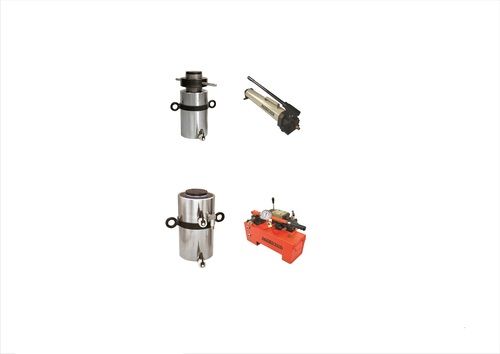
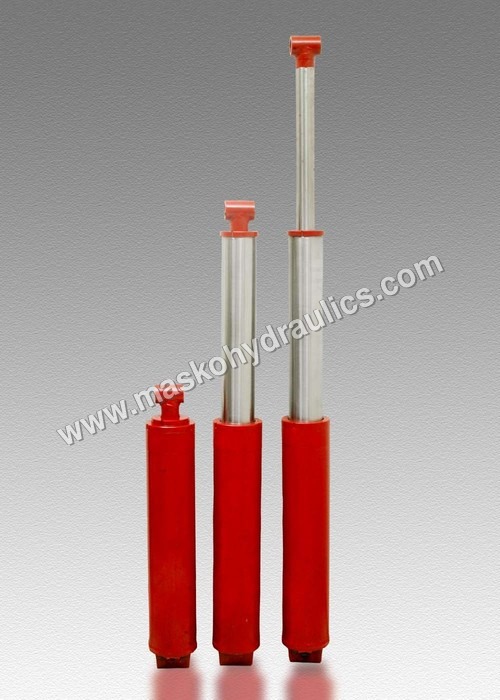
Remote control type hydraulic jack is rugged steel structure that comprises steel cylinders, hydraulics, medium carbon steel rams. Remote operated jack has hydraulic pressure pump with a specific operating pressure, overload safety lock nut and a traversing base. The jack provides safe and stable support to the object to be lifted, preventing twisting and toppling the load of the object.
Versatile Lifting with Remote PrecisionDesigned for industrial environments, this hydraulic jack offers both remote and manual control for flexible operation. It supports a wide range of applications, from shipbuilding to heavy engineering, delivering exacting performance wherever reliable lifting and positioning are required. With models ranging from single acting to double acting, users can select the perfect fit for their job site.
High Safety Standards and DurabilitySafety and durability are at the forefront of this hydraulic jack's design. Equipped with a safety lock nut to securely hold heavy loads, the jack is built from high-grade steel and finished with corrosion-resistant paint. Its advanced high-pressure sealing technology ensures leak-free performance even under intense conditions, prolonging service life and ensuring consistent output.
Flexible Configurations for Every TaskThe jack comes in various capacities, heights, and stroke lengths (from 50 mm to 300 mm), enabling tailored solutions for diverse industrial needs. Compatible with standard hydraulic pumps and hoses, it offers seamless integration into existing hydraulic systems. The optional plain ram variant and manual operation handles add further practicality and control.
FAQ's of Remote Control Type Hydraulic Jack:
Q: How do I operate the remote control type hydraulic jack?
A: Operation is straightforward; connect the jack to a compatible hydraulic pump and hose, then use the remote control for precise lifting and positioning. Manual handles are also provided for direct operation when needed, ensuring flexibility in diverse environments.
Q: What are the main benefits of using this hydraulic jack in industrial applications?
A: The main advantages include high lifting capacity, enhanced safety with a lock nut, leak prevention through high-pressure sealing technology, and the convenience of both remote and manual controls. Its corrosion-resistant finish and robust build ensure reliable operation in demanding conditions.
Q: When should I choose a single acting versus a double acting model?
A: Select a single acting model for standard lifting tasks where gravity can be used for lowering loads. Opt for a double acting model when both lifting and lowering require hydraulic force, providing greater control in complex operations or confined spaces.
Q: What is the process for determining the correct stroke length and capacity for my task?
A: Consult the product chart, which specifies stroke lengths (from 50 mm to 300 mm) and lifting capacities (from 10T to 1000T) for each model. Evaluate the requirements of your specific application to match the appropriate jack model, ensuring optimal safety and performance.
Q: Where can these hydraulic jacks be used?
A: These jacks are ideal for heavy lifting and positioning in construction sites, shipyards, heavy machinery assembly areas, and maintenance workshops. Their design accommodates the rigorous requirements of various industrial sectors.
Q: How does the safety lock nut enhance secure load holding?
A: The integrated safety lock nut mechanically secures the load after lifting, minimizing risk of accidental lowering and ensuring stability during maintenance or extended load holding.
 Gujarat, India







 Send Inquiry


 Send Inquiry


 Send Inquiry
