About Light Weight Hydraulic Cylinder
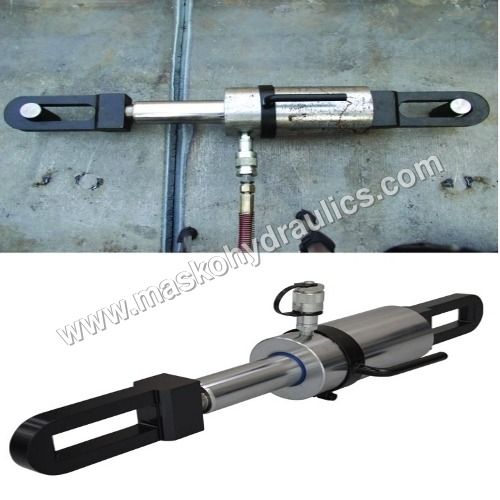
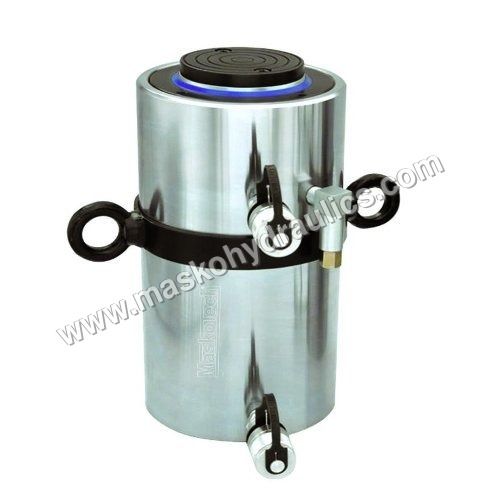
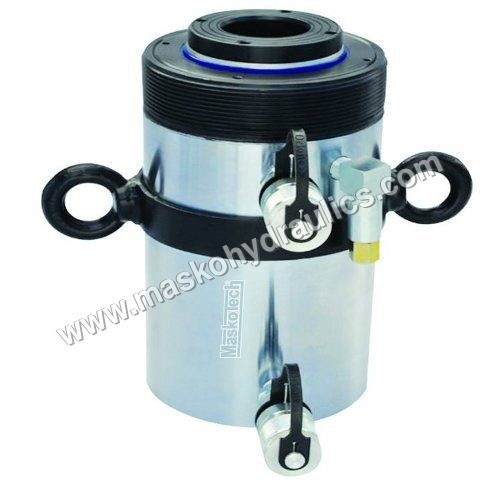
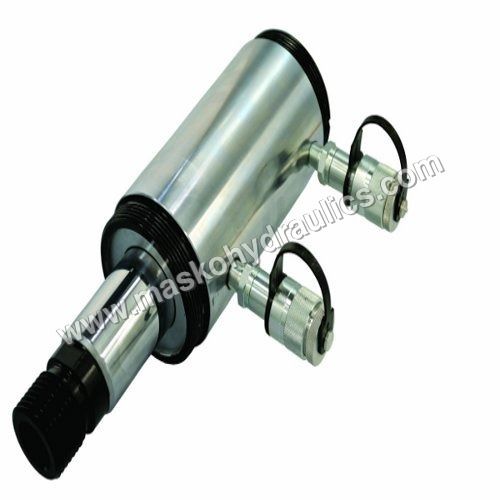
Our company is a prominent manufacturer and supplier of Light Weight Hydraulic Cylinder that is highly acclaimed by our customers due to its robustness. This is efficiently manufactured at our well advanced production unit by making use of the best quality materials and ultra-modern methodology. The offered cylinder is used in sugar mills, pharmaceutical, petrochemical, chemical, and many other industries for fastening purpose. We offer an extensive collection of Light Weight Hydraulic Cylinder in several specifications at affordable rates to our clients.
Other details :
Provided Light Weight Hydraulic Cylinders are featured with H-CFRP piston rods as well as cylinder tubes. Proffered with a mobile as well as stationary lightweight design, these are appreciated for their corrosion-free construction. Supplied in non-magnetic designs, these are suitable for typical mobile & industrial usages. Provided with increased strength and durability, the cylinders are appreciated for their mobility and work as the main actuators. Applicable for manufacturing machinery, construction equipments and civil engineering, these Light Weight Hydraulic Cylinders are highly serviceable in all sectors.
Exceptional Load Handling with High Safety StandardsSupporting forces up to 100 tons, our hydraulic cylinders deliver robust performance while protecting users with overload protection and mechanical lock nuts for load holding. The corrosion-resistant finish, efficient design, and easy maintenance features make it perfect for harsh work environments and demanding lifting or pushing tasks.
Compact and Ultra-Lightweight for Versatile ApplicationsWith weights ranging from 2.5 kg to 16 kg, depending on capacity, and stroke lengths up to 150mm, these cylinders offer a compact solution for constrained spaces. Carry handles and base mounting options facilitate easy transport and fast, secure installation wherever needed.
FAQ's of Light Weight Hydraulic Cylinder:
Q: How do I select the appropriate stroke length and capacity for my application?
A: Assess the lifting height and maximum force required for your specific task. Stroke lengths range from 25mm to 150mm, and force capacities vary by model up to 100 tons. Choose the cylinder that matches your load and operational requirements for optimal results.
Q: What is the process of replacing seals on this hydraulic cylinder?
A: The cylinder is designed for user-friendly maintenance with easy seal replacement. Simply remove the dust cap and access the end cap to replace the polyurethane and nitrile seals as per the user manual, ensuring prolonged leak-free operation.
Q: Where can these hydraulic cylinders be used?
A: They are suitable for use in maintenance, construction, rescue, and industrial environments where compact, lightweight, yet powerful lifting or pushing solutions are needed. Their corrosion resistance and portability make them ideal for both indoor and outdoor applications.
Q: What benefits do spring return (single acting) and hydraulic return (double acting) options offer?
A: Spring return models allow simple retraction after pressure release, ideal for quick, repetitive single-direction lifting. Hydraulic return (double acting) provides controlled extension and retraction, beneficial for precise tasks requiring two-way movement.
Q: How do the built-in safety features enhance operational reliability?
A: The overload protection system prevents excessive load application, while the mechanical lock nut ensures secure load holding even if hydraulic pressure is lost. Together, these features maximize safety and protect both the user and equipment.
Q: What is required to operate these cylinders and connect them to existing systems?
A: An external hydraulic pump (manual or powered) is necessary. The cylinder connects via 3/8" NPT ports using standard hydraulic couplings, allowing easy integration with most industry-standard pumps and hoses.
Q: When should routine maintenance be performed, and what does it include?
A: Routine maintenance should be conducted periodically based on usage frequency and operating environment. Maintenance includes inspecting and replacing seals, checking for leaks or damages, and ensuring all safety and mounting components are secure.
 Gujarat, India






 Send Inquiry


 Send Inquiry


 Send Inquiry
